The Boeing Quantum Creators Prize recognizes early-career researchers for work that moves the field of quantum information science and engineering in new directions. The program began in 2021 and expanded in 2023 thanks to a commitment from Boeing. Prize awardees participate in the annual Quantum Creators Prize Symposium, receive a monetary honorarium, a certificate, and reimbursed travel to the annual Chicago Quantum Summit.
The 2026 Quantum Creators Prize Symposium will be held as part of the Q2B26 x Chicago Quantum Summit on December 8–10, 2026.
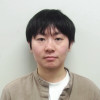
Chenxi Huang
Role: Postdoctoral Researcher
Institution: RIKEN Center for Quantum Computing
Bio: Chenxi Huang is a postdoctoral researcher at RIKEN, working with Dr. Sylvain de Leseleuc. She is broadly interested in quantum many-body physics, quantum simulation, and quantum metrology using programmable neutral-atom arrays. Her work focuses on exploring correlated quantum dynamics and developing advanced techniques for controlling atomic systems. She earned her PhD from University of Illinois Urbana-Champaign under the supervision of Prof. Bryce Gadway.
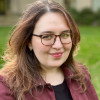
Begüm Kabagöz
Role: Postdoctoral Associate
Institution: Massachusetts Institute of Technology LIGO Labs
Bio: Begüm Kabagöz is a postdoctoral associate at the MIT LIGO Laboratory, advised by Nergis Mavalvala. Her research uses LIGO as a platform for quantum science, investigating how quantum states interact with complex optical systems. Her broader interests include quantum measurement engineering, information processing, and secure, scalable quantum networks. She received her PhD in Electrical Engineering from Boston University, where she worked on ultrafast nonlinear optics in multimode fibers.

Catie LeDesma
Role: Postdoctoral Researcher
Institution: JILA and University of Colorado Boulder
Bio: Catie LeDesma is a postdoctoral researcher at JILA, University of Colorado Boulder, working with Professor Murray Holland. She is broadly interested in quantum sensing with Bose-Einstein condensates, atom interferometry, and ultracold atomic physics. Her research focuses on developing programmable atom interferometers using optical lattices for precision inertial sensing. She earned her PhD in Physics from the University of Colorado Boulder in 2024.
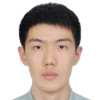
Yu-Kun Lu
Role: Postdoctoral Fellow
Institution: Harvard University
Bio: Yu-Kun Lu is a postdoctoral fellow in Mikhail Lukin’s group at Harvard University, working on photonic interfaces for neutral-atom quantum processors. He received his PhD in physics from MIT in 2025 under the supervision of Wolfgang Ketterle. His PhD research explores light–matter interactions with ultracold atoms, including how quantum statistics and spatial correlations influence light scattering and how dipolar atoms can be manipulated at subwavelength scales.

Ryan Murphy
Role: Postdoctoral Fellow
Institution: Massachusetts Institute of Technology
Bio: Ryan Murphy is an Arnold O. Beckman postdoctoral fellow at MIT, working in the group of Prof. Danna Freedman. Ryan’s research interests in spin dynamics range from strongly correlated electronic systems to color centers. Murphy earned a PhD from UC Berkeley in 2024, advised by Prof. Jeffrey Long.

Quynh Nguyen
Role: Postdoctoral Researcher
Institution: University of California, Berkeley
Bio: Quynh Nguyen is a Simons quantum postdoctoral fellow at the UC Berkeley, hosted by Umesh Vazirani. He is interested in all aspects of quantum computing. His recent work aims to improve the efficiency of quantum error correction and identify new quantum algorithms. He earned his PhD at Harvard University.
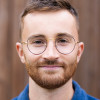
Jef Pauwels
Role: Postdoctoral Researcher
Institution: University of Geneva
Bio: Jef Pauwels is a postdoctoral researcher in quantum information theory at the University of Geneva, Switzerland. He obtained his PhD from the Université libre de Bruxelles in 2023. His research focuses on the foundations of quantum information, particularly quantum nonlocality, entanglement, and the structure of quantum measurements, with applications to device-independent certification and quantum communication. He was recently awarded an Ambizione grant from the Swiss National Science Foundation to pursue independent research on verifiable quantum networks.

Rahul Sahay
Role: Graduate Student
Institution: Harvard University
Bio: Rahul Sahay is currently a graduate student at Harvard University, advised by Professor Ashvin Vishwanath. His research focuses on building a systematic understanding of how to realize and manipulate emergent quantum phenomena (e.g., phases of matter and error correcting codes) given experimental resources and constraints. This aims not only to aid near- and long-term efforts in quantum computation but also to build towards a broader, "resource-theoretic" understanding of emergence.
Vincent Steffan
Role: Quantum Error Correction Engineer
Institution: IQM Germany
Bio: Vincent Steffan is a senior quantum error correction engineer at IQM Germany. He earned his Ph.D. at Copenhagen University with Matthias Christandl. At IQM, he works on hardware-aware qLDPC code constructions, particularly Tile Codes.
Ryan White
Role: PhD Student
Institution: University of Chicago
Bio: Ryan White is a graduate student in the University of Chicago, working with Hannes Bernien at the University of Innsbruck. His research uses dual-species arrays of rubidium and cesium atoms to investigate quantum information processing techniques, including mid-circuit measurement, interspecies entangling gates, and globally-controlled "automaton" protocols.
Xuntao Wu
Role: Graduate Student
Institution: University of Chicago
Bio: Xuntao Wu is a PhD student at the University of Chicago, advised by Professor Andrew Cleland. During his PhD, he has been working on building modular superconducting quantum architectures that support flexible connectivity and efficient quantum operations.
Jiachen Yu
Role: Postdoctoral Fellow
Institution: Princeton University
Bio: Jiachen Yu is a PCCM postdoctoral fellow at Princeton University, advised by Prof. Ali Yazdani. His research interests broadly encompass quantum microscopy techniques and their applications to two-dimensional quantum materials and devices. He received his Ph.D. from Stanford University in 2023, advised by Prof. Ben Feldman.
View previous winners
- 2025 Boeing Quantum Creators Prize Winners
- 2024 Boeing Quantum Creators Prize Winners
- 2023 Boeing Quantum Creators Prize Winners
- 2022 Quantum Creators Prize Winners
- 2021 Quantum Creators Prize Winners
Questions can be directed to quantum@uchicago.edu.